Best Star Projector Sale 2026: Factory-Direct Galaxy Deals
 FACEBOOK
 TWITTER
 LINKEDIN
Ever wonder why your bedroom feels more like a storage unit than a sanctuary? Most of us spend hundreds on high-thread-count sheets and blackout curtains, yet we forget the most important part of sleep: the atmosphere. If you’ve been hunting for a star projector sale, you’ve probably noticed the market is flooded with plastic junk that looks like a cheap flashlight. But right now, the technology has finally caught up with our imaginations. High-definition optics and smart home integration are becoming the standard, and we’re here to help you snag the best deals without the middleman markup.
Why You Shouldn’t Wait for a Major Holiday Sale
Waiting for Black Friday or Prime Day to find a star projector sale is a common mistake. While big-box retailers offer deep discounts during those windows, they often clear out older, grainier models to make room for new stock. By buying direct from the manufacturer, you’re usually getting the latest 2026 internal hardware—like quieter motors and better heat dissipation—at a price that beats retail clearance.
Furthermore, these devices have evolved into essential wellness tools. They aren’t just for kids’ nightlights anymore. Adults are using them for deep meditation, yoga, and even as a backdrop for high-end home theaters. Consequently, the demand for realistic galaxy effects has skyrocketed. If you find a model you love on sale today, it’s better to grab it now than to risk a “Sold Out” badge during the holiday rush.
What Makes a “Good” Star Projector Actually Worth Your Money?
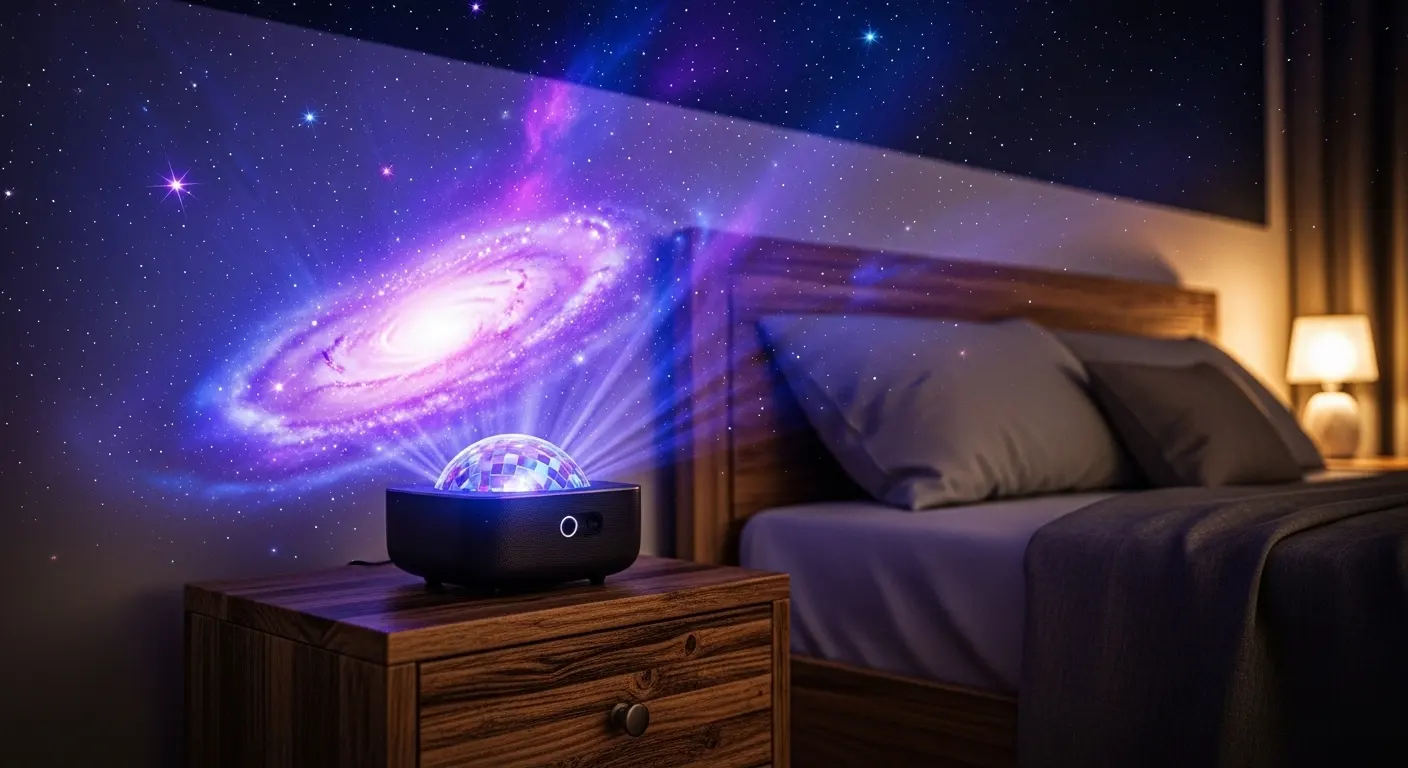
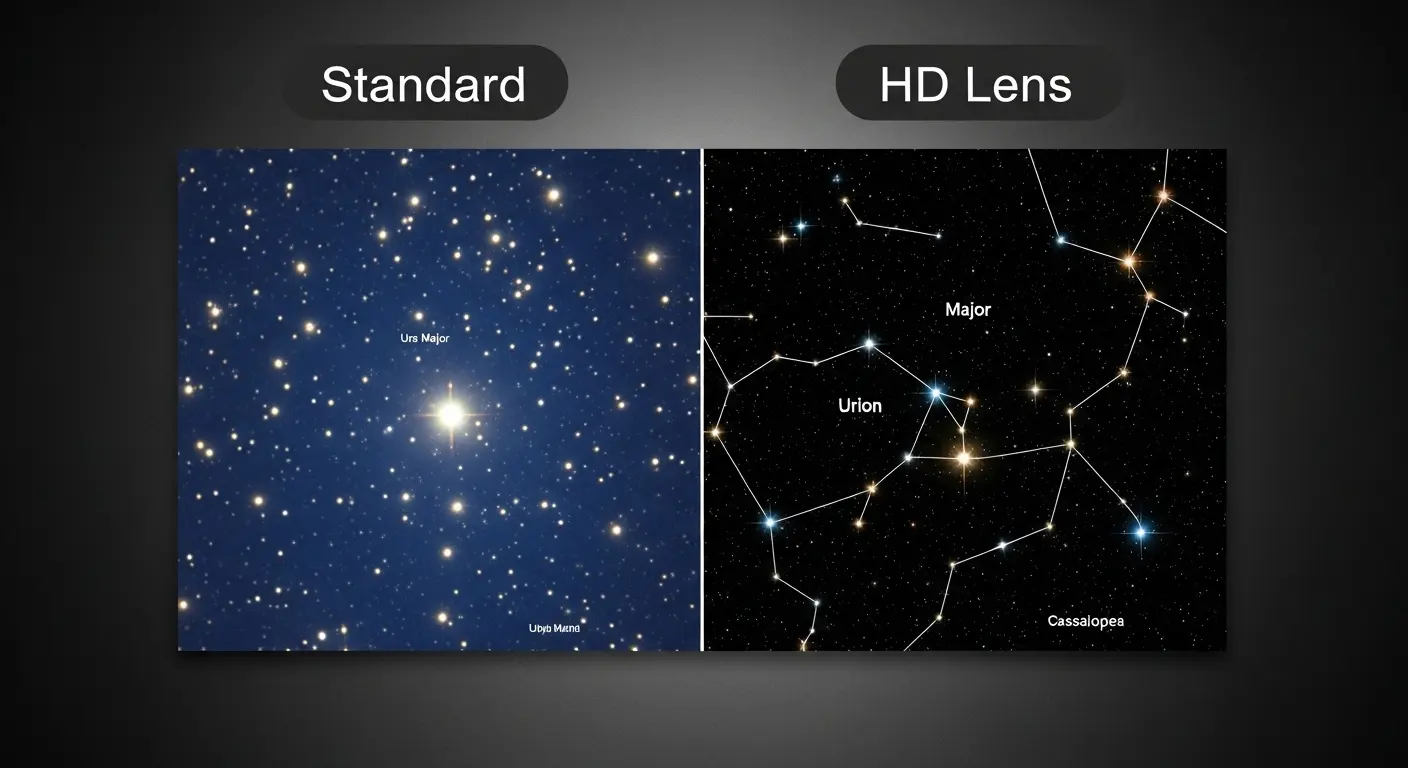
Before you hit the “Buy” button on the first discount you see, you need to know what’s under the hood. A true sale isn’t a bargain if the image is blurry. Look for models that utilize precision glass lenses rather than cheap plastic ones. Plastic lenses tend to warp over time due to the heat of the internal LED, leading to a “fuzzy” galaxy that looks more like a smudge than a star system.
High-quality models, like our 3D Galaxy Projector, use multi-layer optical systems to ensure the stars stay sharp even at the edges of the room. When you’re browsing, check the “throw distance.” A professional-grade projector should be able to cover a 15×15 foot room without losing clarity. If the manufacturer doesn’t list the resolution or the lens material, that’s usually a red flag.
The Best Star Projector Sales for Different Room Types
Not every projector fits every room. If you’re setting up a dedicated nursery, your needs differ wildly from someone building a “man cave” or a gaming setup. For instance, a nursery requires a “silent motor” guarantee. There is nothing worse than a motorized galaxy that hums loud enough to keep a baby awake.
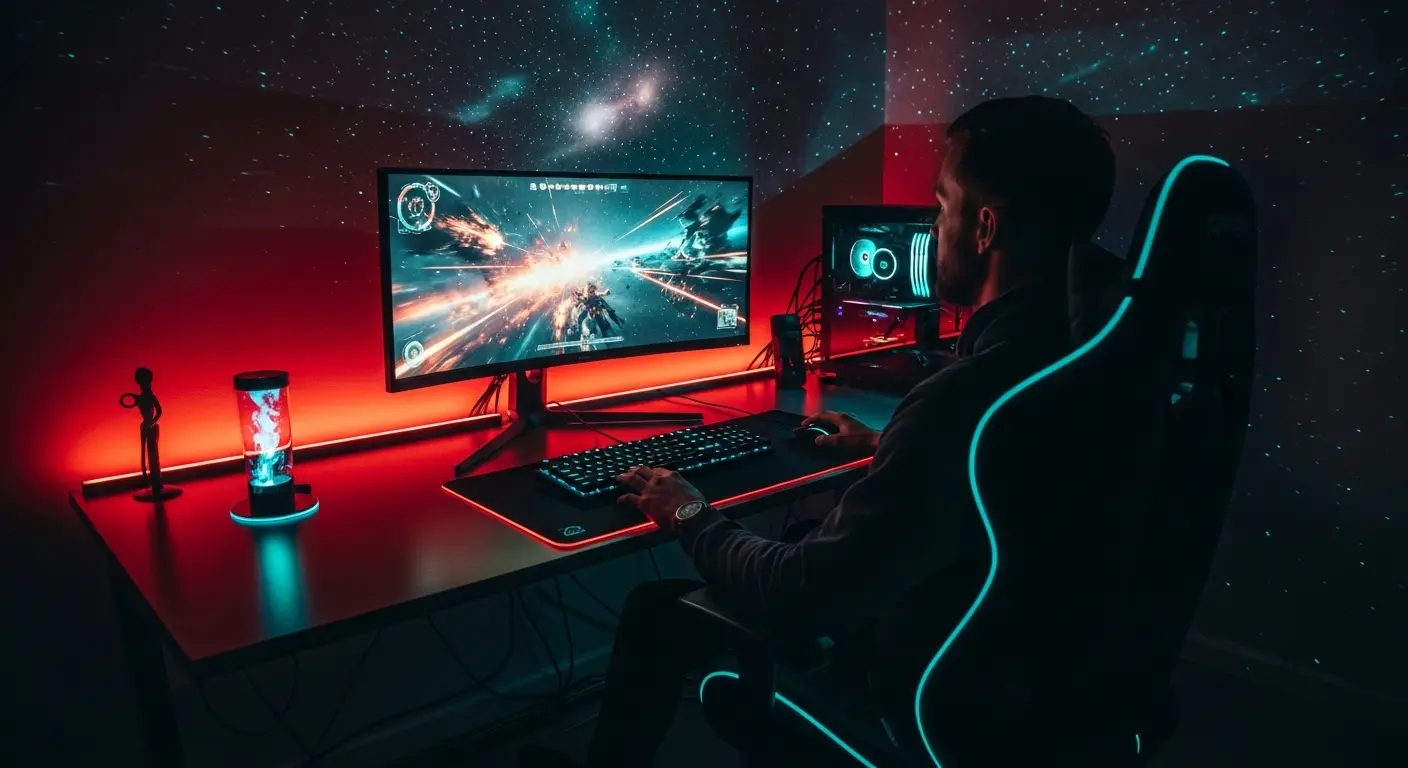
On the other hand, gamers usually want something that integrates with their existing ecosystem. Our Star Projector with Speaker allows you to sync the nebula pulses to your game’s soundtrack or your favorite lo-fi beats. This level of immersion is exactly why these sales are so popular right now. You’re not just buying a lamp; you’re upgrading your entire digital environment.
What is the Most Realistic Star Projector for 2026?
If you’re looking for the absolute peak of realism, you should focus on “Home Planetariums” that use interchangeable discs. Unlike basic nebula lamps that use a rotating LED and a simple stencil, high-end 3D models project actual star maps. These devices often include thousands of individual points of light, accurately representing the Milky Way or specific constellations.
For those who want a mix of realistic stars and artistic nebula clouds, the Galaxy 3D Projector offers the best of both worlds. It combines a laser-pointed star field with a high-resolution 3D nebula cloud. This creates a sense of depth that makes your ceiling look like it’s miles deep rather than just a flat surface. When these premium models go on sale, they provide the best “bang for your buck” in terms of visual quality.
How to Identify Fake Sales and “Inflated” Discounts
It’s a common tactic in the tech world: a company raises the “Original Price” to $100 just to put it on “Sale” for $40. To avoid this, always look at the historical pricing if possible. A legitimate star projector sale should offer a genuine 15-30% discount off the standard manufacturing price.
Another tip is to look for “Factory Direct” labels. When you buy from a source like Bolangmake’s Star Projector Collection, you’re cutting out the 40% markup that retailers like Amazon or Best Buy add to cover their own logistics and advertising costs. This means you get a $100-quality device for $60, simply because there’s no middleman taking a cut.
The Hidden Technology: 3LCD vs. DLP in Home Projectors
You might see these terms thrown around in high-end projector descriptions. In the world of star projection, the lighting engine is everything. 3LCD technology is known for producing vibrant, saturated colors in the nebula clouds. This is perfect if you want deep purples and fiery oranges.
DLP (Digital Light Processing), however, is often better for the “stars” themselves. It allows for higher contrast, meaning the black space between stars looks “blacker,” and the stars themselves appear brighter and more pinpointed. Many of our top-rated models, including the Starry Sky Projector, use a hybrid approach to give you the best color and the sharpest star field simultaneously.
Smart Home Integration: Why “Matter” Support Changes Everything
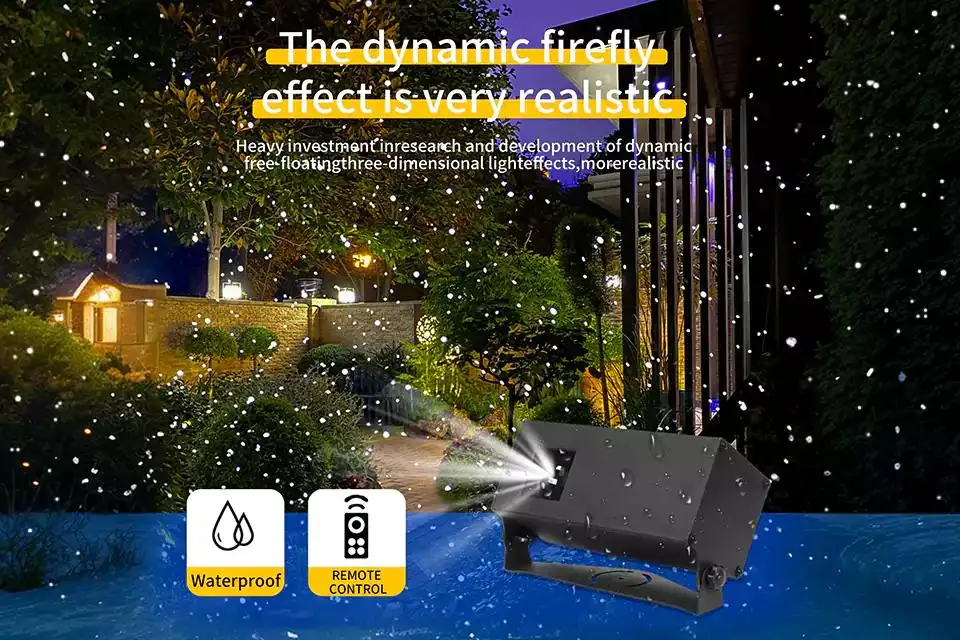
In 2026, a star projector shouldn’t just have a remote. It should be part of your “Goodnight” routine. With the rise of the “Matter” smart home standard, you can now link your projector to your lights, thermostat, and sound system with a single command. Imagine saying, “Alexa, it’s bedtime,” and your overhead lights dim, your Firefly Laser Light Projector turns on, and a soothing rain soundscape begins to play.
When looking for a sale, prioritize models with App or Voice control. Even if you don’t use a smart hub yet, having the option to change the nebula speed or color from your phone is far more convenient than hunting for a tiny plastic remote in the dark. Plus, smart models often receive firmware updates that can add new lighting patterns or improved motor control over time.
Why Brightness (Lumens) Matters More Than You Think
One of the biggest complaints users have is that their projector is too dim to see unless the room is pitch black. While “starry nights” should be dark, you might want to use the projector as ambient lighting during a party or while watching a movie. This is where “Lumens” come into play.
A standard cheap projector might only offer 100-200 lumens, which disappears if there’s a single lamp on in the corner. Professional models aimed at the high-end market usually push 500-800 lumens for nebula effects. This ensures that the colors remain vivid even if you have a bit of ambient light. Check the specs during a sale—if the brightness isn’t listed, it’s probably underpowered.
Maintenance Tips: Keep Your Galaxy Looking New
Once you’ve secured your star projector sale, you want to make sure it lasts for years. The biggest enemy of these devices is dust. Because they use high-intensity LEDs and fans for cooling, dust can eventually settle on the internal lens or the laser diode.
To prevent this, simply wipe the external lens with a microfiber cloth once a week. Avoid using glass cleaners with ammonia, as these can strip the anti-reflective coating off the lens. If your projector has a “disc” system, keep the extra discs in their protective case to avoid scratches. Proper care ensures that your $50 investment looks like a $500 planetarium show every single night.
Choosing the Right Light Source: Laser vs. LED
Most modern star projectors use a combination of both. LEDs are fantastic for the broad, swirling nebula clouds. They are energy-efficient, stay cool, and can produce millions of color combinations. However, LEDs aren’t great at creating tiny, sharp points of light.
That’s where lasers come in. A green or blue laser diode is used to create the actual “stars.” This is why you’ll see some products listed as “Laser Star Projectors.” The laser light travels much further and stays sharper than an LED ever could. When shopping a sale, look for a “Dual Source” device. This gives you the artistic beauty of LED nebulas and the scientific precision of laser stars.
Is It Safe to Leave a Star Projector on All Night?
This is a common question for parents. The short answer is: yes, provided the device has an auto-shutoff timer. Most modern projectors are designed with low-voltage internal components that don’t generate much heat. However, for the sake of the motor’s longevity, it’s best to use a model that turns off after 4 or 6 hours.
This feature is standard in our Star Projector Collection. It gives your child (or you!) enough time to drift off to sleep under the stars without wasting electricity or putting unnecessary wear on the internal hardware. If a model doesn’t mention an “Auto-Off” feature, you might want to keep looking.
Creating the Perfect Vibe: Placement and Angles
You’ve bought the projector. It’s arrived. Now, where do you put it? To get the most out of your star projector sale purchase, place the device in a corner or on a low nightstand. Aim it toward the center of the ceiling at a slight 45-degree angle.
This positioning creates a “wrap-around” effect where the nebula seems to spill down the walls, making the room feel significantly larger. If you place it directly in the middle of the floor pointing straight up, the image will be centered but you’ll lose that immersive “dome” feeling. Experiment with different heights to find the “sweet spot” where the stars are sharpest.
FAQ: Your Burning Questions About Star Projector Sales
Q: Are cheap star projectors worth it? A: Usually, no. Extremely cheap models (under $20) often use low-quality plastic lenses that produce blurry images and noisy motors that break within months. It’s better to find a mid-range model on sale for a similar price.
Q: Can I use these projectors in a large living room? A: Yes, but check the “Projected Area” spec. High-quality projectors can cover up to 500-800 square feet. If you have a very large open-plan space, you might actually want two projectors synced together for total coverage.
Q: Do these projectors help with sleep or anxiety? A: Many users find the rhythmic, slow movement of the nebula clouds to be incredibly grounding. Combined with built-in white noise or “rain” sounds, they are excellent tools for winding down after a stressful day.
Q: What is the difference between a galaxy projector and a star projector? A: While the terms are often used interchangeably, a “star” projector usually focuses on pinpoint lights, while a “galaxy” or “nebula” projector focuses on the colorful, cloud-like gases. The best units do both simultaneously.
Q: Do I need a screen for the projection? A: Not at all. These are designed to work best on flat, light-colored ceilings and walls. A white or light-grey ceiling will give you the most accurate color representation.
Ready to Upgrade Your Space?
There has never been a better time to invest in your home’s atmosphere. Whether you’re looking to improve your sleep, spice up your gaming setup, or give your kids a reason to actually look forward to bedtime, a high-quality star projector is a literal “game-changer.”
Don’t settle for the blurry, buzz-filled models of the past. Take advantage of our current factory-direct pricing and bring the cosmos into your living room. Check out our full range of professional-grade optics and find your perfect match today.