How Green, Red, and Orange Light Colors Impact Your Sleep
 FACEBOOK
 TWITTER
 LINKEDIN
Light is more than just illumination — it directly affects how your body and brain prepare for rest. In modern life, exposure to artificial lighting, screen light, and overhead bulbs has become a daily routine. But not all light is created equal, especially when it comes to supporting healthy sleep patterns.
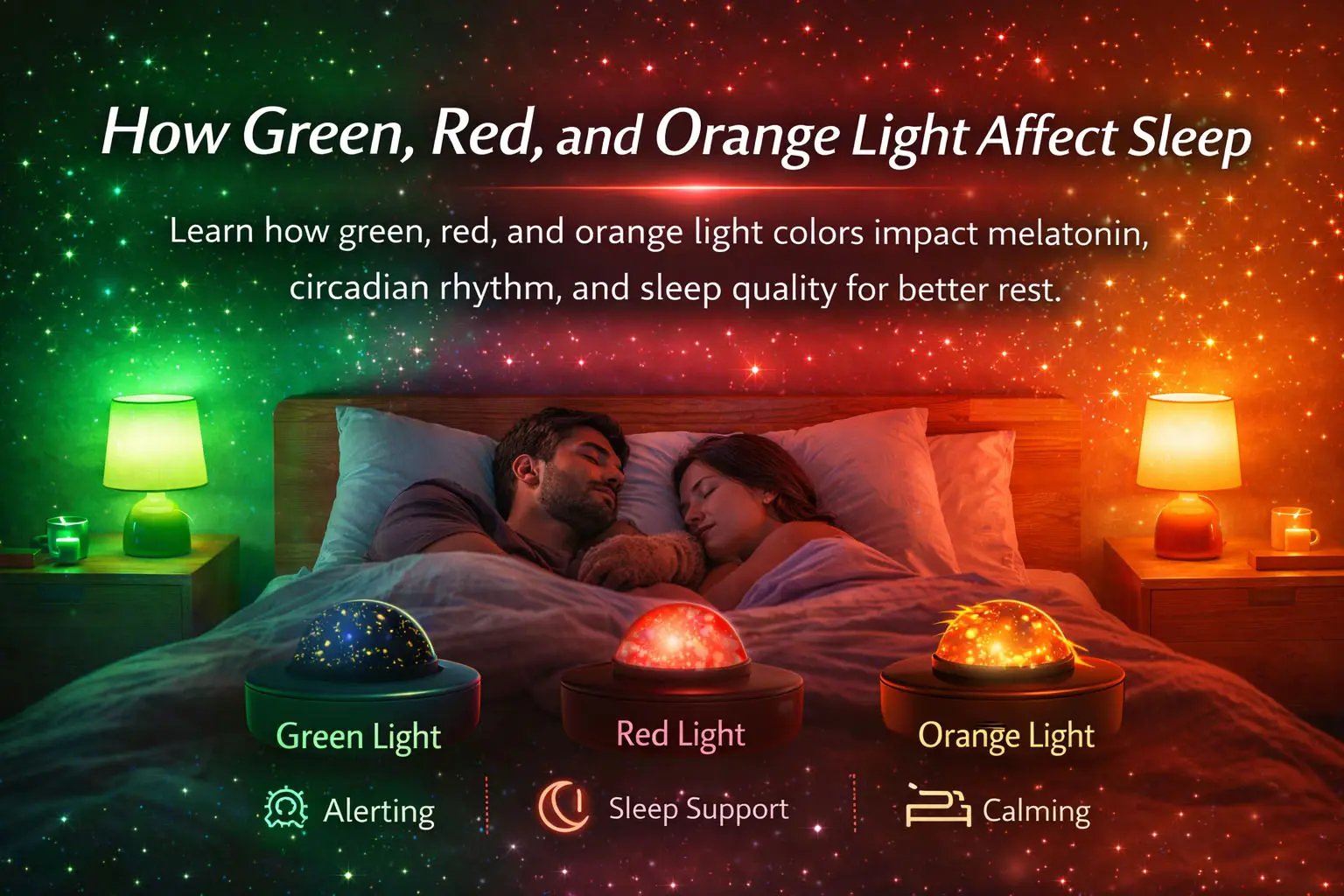
Experts increasingly recognize that light color and wavelength play a significant role in regulating circadian rhythms, melatonin production, and overall sleep quality. In this guide, we’ll explore how green, red, and orange light each impacts your body’s sleep processes, why certain hues are better for evenings, and how lighting tools like galaxy projectors can support restful nights. Whether you’re aiming to enhance bedtime routines for adults or children, understanding color impact can make a real difference.
How Light Influences Sleep: A Quick Overview
At the core of sleep regulation is your body’s circadian rhythm — a natural 24-hour cycle driven by internal clocks in the brain and influenced by light exposure. When your eyes detect bright, cool-tone light (especially blue light), your brain interprets it as daytime and suppresses melatonin — the hormone that signals it’s time to rest.
Conversely, softer, warmer hues such as red and orange have minimal effect on melatonin suppression and can create environments more conducive to relaxation. Galaxy projectors and ambient lighting solutions that use warm tones can help structure an evening routine that supports your natural sleep rhythm rather than disrupt it.
Green Light: Moderation and Melatonin
Green light sits between blue and yellow on the light spectrum and has a moderate effect on your circadian rhythm. Research indicates that green wavelengths can still suppress melatonin — though not as powerfully as blue light — and influence alertness.
Key Points About Green Light and Sleep
-
Alerting Potential: Green light may increase alertness more than warmer hues.
-
Moderate Melatonin Impact: It influences sleep-related hormones, but to a lesser extent than blue light.
-
Use With Care in Evenings: Too much green light near bedtime — such as from screens or bright LEDs — may delay sleep onset.
In evening lighting, green tones are best used sparingly and in combination with warmer colors. Galaxy projectors that blend colors can mix green with red or orange to create visually appealing but sleep-friendly ambiance.
Red Light: Minimal Melatonin Suppression
Red light has the least impact on melatonin production among visible light colors. Its long wavelength passes through the eye with minimal interference in the brain’s sleep signaling processes.
Why Red Light Is Good for Sleep Support
-
Least Disruptive: Red doesn’t significantly suppress melatonin, making it ideal for pre-bed routines.
-
Warm & Soothing: The red spectrum evokes warmth and calm, helping the body transition toward relaxation.
-
Recommended for Nighttime Lighting: Because it interferes less with your biological clock, red light is often recommended for evening use.
Many sleep experts suggest using red or deep amber lighting in bedrooms after sunset, especially in the last hour before sleep. Some galaxy projectors offer red-dominant modes specifically for this purpose.
Orange Light: Balancing Warmth and Comfort
Orange light falls between red and yellow on the spectrum and creates a warm, cozy tone that many people find emotionally comforting. While it does have a slightly greater impact on circadian rhythm than red, orange light remains significantly less disruptive than cool white or blue light.
Orange Lighting Benefits
-
Comforting Ambience: Orange hues mimic sunset and firelight, which historically signaled evening and rest.
-
Sleep-Friendly: Although a bit stronger than red light, orange still supports melatonin production better than cooler tones.
-
Perfect for Wind-Down Routines: Orange can be a bridge between daytime lighting and full darkness, helping ease the transition to sleep.
In lighting design for bedrooms or relaxation areas, orange tones offer a balance of warmth and calm without overstimulating the senses.
Why Blue and White Light Can Disrupt Sleep
Before diving deeper into how green, red, and orange light help with sleep, it’s important to understand what hurts sleep quality.
Blue and cool white light — common in screens, overhead LEDs, and bright bedroom lamps — activates receptors in the eye that signal “daytime” to the brain. This suppresses melatonin release, increases alertness, and can delay the onset of sleep.
For those who struggle with falling asleep or maintaining a calm evening routine, minimizing exposure to blue-rich lighting in the hours before bed is crucial.
How Galaxy Projectors Can Support Better Sleep
Galaxy projectors — including star, nebula, and aurora styles — project ambient light patterns across walls and ceilings. Many models allow users to customize color outputs and brightness levels, making them excellent tools for sleep-friendly lighting.
Here’s how to use them effectively:
🌙 1. Set Warm-Dominant Tones
Choose color modes with red and orange dominance for the last hour before sleep. These warm hues avoid disrupting melatonin and create a calming ambience.
⏱ 2. Use Timers or Auto-Off Features
Set your galaxy projector to turn off 30–60 minutes after bedtime. This way, calming visuals help you relax, but bright light doesn’t stay on all night.
🧘 3. Combine With Relaxation Practices
Pair gentle color lighting with calming activities — like reading, meditation, or soft music — to create a complete wind-down routine.
👶 4. Ideal for Kids’ Bedrooms
Children often resist bedtime due to fear of darkness or overstimulation. Warm, ambient light from galaxy projectors — especially in orange or red-tinged modes — offers comfort without suppression of sleep readiness.
Real User Experiences and Benefits
Many people who struggle with sleep quality report improved bedtime experiences when integrating warm, ambient lighting into their routines:
-
Falling asleep faster without disruptive glare
-
Enhanced sense of calm before bed
-
Reduced anxiety linked to harsh lighting
-
More consistent sleep cycles over time
These benefits align with broader light therapy principles, which highlight the power of wavelength and color on circadian regulation.
Practical Lighting Tips for Better Sleep
Here are actionable recommendations:
🔆 Avoid Bright Blue or Cool White Lights After Sunset
Switch off screens or use night settings at least 60 minutes before bed.
🌅 Use Warm-Tone Lighting in the Evening
Prioritize red, orange, or amber lighting in bedrooms and relaxation spaces.
💡 Adjust Brightness
Keep light intensity low — high brightness stimulates alertness, even if the color is warm.
🛌 Integrate into Wind-Down Rituals
Routine matters. Consistent lighting from your galaxy projector signals your body it’s time to rest.
Final Thoughts: Color Matters for Sleep
Light color isn’t just a design choice — it’s a physiological cue that affects how your body prepares for rest. Green, red, and orange light each interact differently with your biological sleep systems, with warmer tones like red and orange helping support a natural transition toward calmness and melatonin production.
By understanding these effects and using lighting tools like galaxy projectors thoughtfully, you can build an evening environment that not only looks beautiful but feels conducive to better sleep — whether for yourself, your children, or your whole family.