3D Starry Sky Projector Wholesale with No-Glasses 3D Projection Technology
 FACEBOOK
 TWITTER
 LINKEDIN
The wholesale market for 3D starry sky projectors is moving beyond simple star points and rotating nebula patterns. For distributors and private-label brands, the more important question is now whether one projector can create convincing visual depth, cover different room sizes, support multiple content themes, and still remain practical for bulk production.
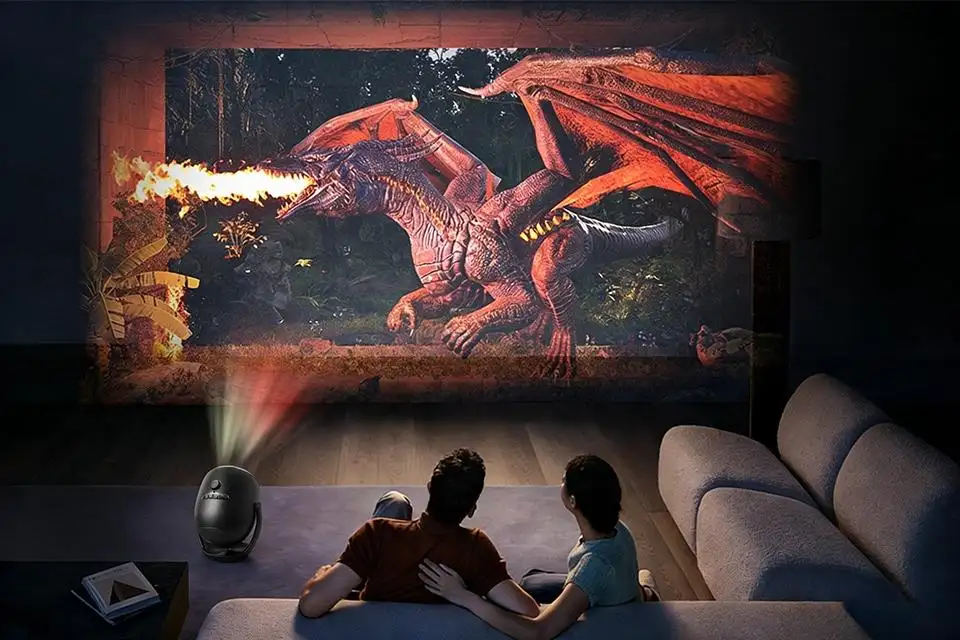
A no-glasses 3D-style projector addresses this through a combination of multi-layer scene design, adjustable focus, wide projection coverage, dynamic content, remote control, and Bluetooth audio. These functions should not be evaluated separately. Projection distance affects image size and brightness; focus affects definition; ambient light affects contrast; and scene structure determines whether the projected image actually appears spatial rather than flat.
For buyers evaluating wholesale 3D starry sky projectors, understanding these relationships is more useful than simply comparing the number of lighting effects.
How No-Glasses 3D Projection Creates Visual Depth
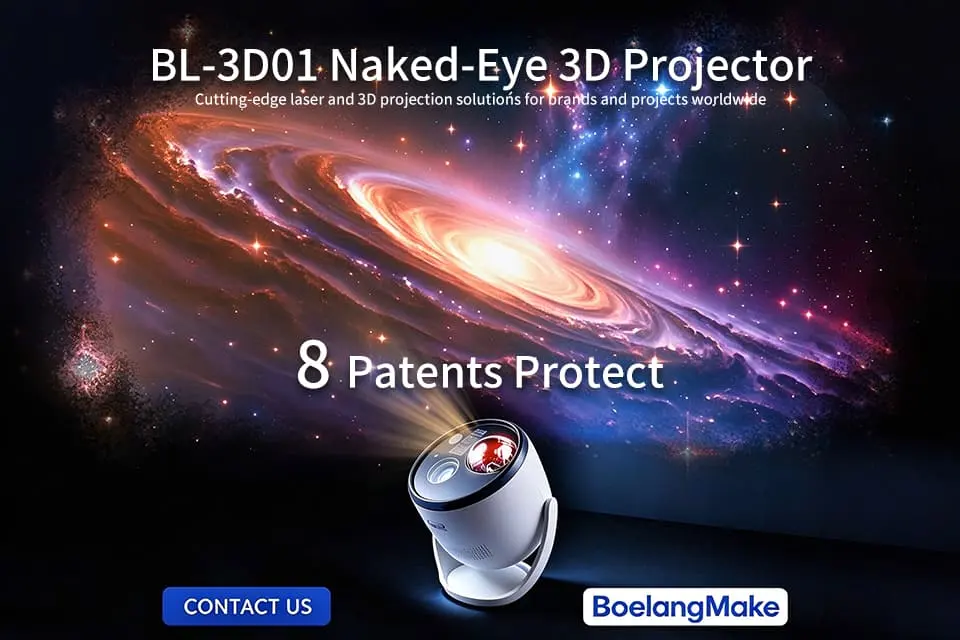
“No-glasses 3D“ does not necessarily mean stereoscopic or autostereoscopic 3D. In this projector category, a more technically accurate description is 3D visual-effect projection or holographic-style immersive projection.
The perception of depth can be created through several visual cues:
•Foreground and background separation;
•Perspective changes between objects;
•Relative movement at different depths;
•Scaling of objects as scenes move;
•Layered particles, clouds, stars, or landscape elements;
•Brightness and shadow transitions.
When these cues are combined in animated scenes, the viewer perceives stronger spatial depth without wearing 3D glasses.
This is a key distinction for wholesale buyers of 3D star projectors. A standard galaxy light may create attractive ambient color, while a multi-scene projector is designed to create a more complete visual environment.
3D Multi-Scene Projection vs. Conventional Galaxy Lighting
The two solutions serve different product positions rather than simply representing high-end and low-end versions of the same device.
| Technical Dimension | 3D Multi-Scene Projector | Conventional Galaxy Projector |
| Projection content | Complete animated scenes | Stars, nebula, color effects |
| Depth perception | Layered visual depth | Primarily flat ambient effect |
| Scene flexibility | 90+ scene options | Usually fewer effect combinations |
| Focus control | Adjustable for different distances | Often less critical |
| Typical environment | Gaming, home theater, bedroom, relaxation | Bedroom and ambient lighting |
| B2B positioning | Lifestyle / entertainment projector | Basic atmosphere light |
For entry-level night-light applications, a conventional projector may already be sufficient. 3D Starry Sky Projector Wholesale becomes more relevant when buyers need broader visual content and stronger differentiation without adding many separate hardware SKUs.
Why Projection Distance, Area, and Focus Must Be Considered Together
The projector supports approximately 3–5 m projection distance with a stated 15–50 m² projection area. These numbers should not be interpreted independently.
Increasing projection distance normally produces a larger image, but the available light is distributed across a wider surface. In practice:
Longer distance → larger projection → lower light density → greater dependence on room darkness and focus accuracy.
This means maximum coverage does not automatically mean maximum image quality.
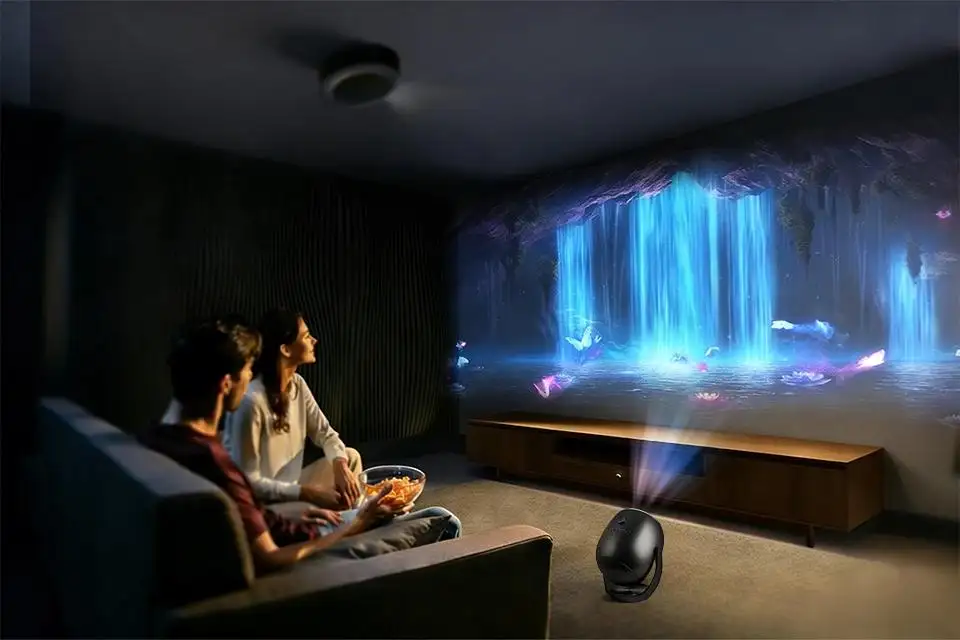
Adjustable Focus Solves a Practical Optical Problem
When projection distance changes, image definition can also change. Adjustable focus allows the user to compensate for the new placement distance instead of relying on a single fixed-focus position.
Actual viewing quality also depends on:
•Wall or ceiling color;
•Surface texture;
•Room illumination;
•Projector angle;
•Distance from the projection surface;
•Scene brightness and contrast.
This interaction is important when selecting 3D Starry Sky Projector Wholesale products for different target markets. A projector used in a dark gaming room is operating under very different conditions from one used in a partially illuminated living room.
Why 90+ Scenes Matter Beyond a Larger Feature List
Scene quantity has a commercial value only when the content expands real use cases.
A 90+ scene library can allow one projector platform to cover multiple visual categories, including:
•Galaxy and deep-space environments;
•Ocean and underwater scenes;
•Forest and nature themes;
•Festival and holiday scenes;
•Relaxation backgrounds;
•Gaming and entertainment atmospheres.
For distributors, this creates an important SKU advantage. Instead of purchasing separate hardware for galaxy, ocean, holiday, and relaxation themes, a 3D Starry Sky Projector Wholesale program can potentially cover several consumer interests with one platform.
BoelangMake can further adapt the platform through OEM/ODM options such as logo branding, housing color, packaging, projection themes, product appearance, and selected functional adjustments.
Bluetooth Audio: Useful Integration, Not Just an Added Feature
Bluetooth speakers add value when sound and visual content are used together.
Typical applications include:
•Gaming rooms with background audio;
•Home cinema ambience;
Meditation or relaxation spaces;
•Bedroom music playback;
•Parties and entertainment environments.
However, Bluetooth playback should not automatically be described as music-reactive projection. Audio transmission and real-time image synchronization are technically different functions.
In wholesale 3D star projector sourcing, specifications should clearly separate Bluetooth audio capability from any music-controlled lighting function.
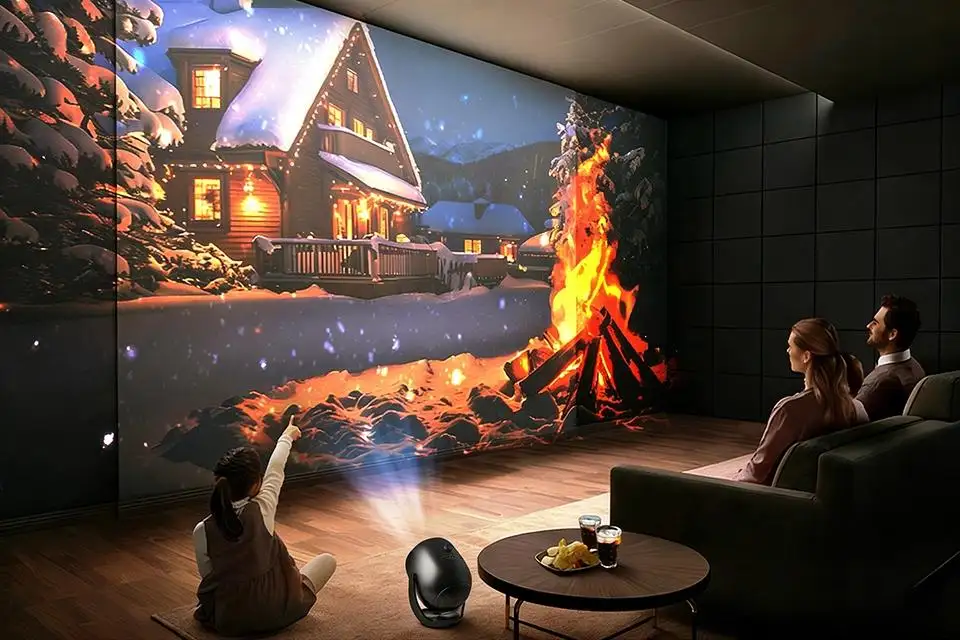
Power Architecture and Installation Considerations
The projector uses a 110–240V, 50–60Hz adapter and a DC19V/1.5A product input, while the tabletop design simplifies indoor installation.
For distributors supplying multiple regions, the wide adapter input range is useful, but plug type, adapter documentation, cable specification, and destination-market requirements still need to be confirmed for each order.
Daily setup should also account for several practical factors:
•Position the projector on a stable surface;
•Adjust projection distance before final focusing;
•Refocus after moving the unit;
•Avoid blocking ventilation areas;
•Keep the optical surface free from dust;
•Test sample performance under realistic room lighting.
What Wholesale Buyers Should Verify Before Bulk Production
A professional wholesale evaluation of 3D starry sky projectors should go beyond appearance and scene quantity
| Verification Area | What Buyers Should Confirm |
| Projection system | Actual light source and projection architecture |
| Image specification | Resolution definition and viewing conditions |
| Optical performance | Distance, coverage, focus range |
| Scene system | Number, type, and customization of scenes |
| Bluetooth | Audio function and wireless configuration |
| Power | Adapter input, DC output, plug configuration |
| Compliance | Documents applicable to exact product configuration |
| OEM changes | Whether modifications require further validation |
Buyers should be particularly careful with terms such as “HD,” “eye-care,” “3D,” and “certified.” Each should be supported by an appropriate specification or test document rather than treated as a generic marketing term.
Engineering OEM/ODM for 3D Starry Sky Projector Wholesale
BoelangMake combines product customization with in-house manufacturing resources. The company operates a 5,000+ m² production facility, has 15+ R&D engineers, 200+ patents, and 5+ automated production lines, supported by more than a decade of laser-application development experience.
Its capabilities cover ambient starry-sky projectors, landscape projection, stage applications, hotel lighting applications, and laser-LED hybrid light-source products. OEM/ODM projects can include branding, packaging, colors, projection content, exterior design, and selected functional changes.
For compliance-sensitive markets, BoelangMake states that its manufacturing and product programs involve BSCI/WCA factory certifications and CE, TÜV, FDA, RoHS, and PSE-related requirements. Buyers should still verify which reports and approvals apply to the exact configuration being ordered.
When building a wholesale program around 3D star projectors, it cannot be stressed enough that the best product is not the one with the most scenes, rather, it is the one with the most compelling projection structure and flexibility. Viewing distance, focus, room conditions, customization, flexibility, volatility, and compliance are all relative to each other and, as a whole, matter. BoelangMake helps buyers to better understand these variables through confirming samples, OEM/ODM development, and bulk production.
FAQs
Q1. What does ‘no-glasses 3D’ mean on BoelangMake star projectors?
BoelangMake star projectors create an impressive 3D effect without the need for any special glasses. The projectors use layering, motion, and depth effects, as well as changing light effects to create a unique visual experience.
Q2. How many projection scenes are available?
The projector has over 90 projection scenes. There are scenarios for night skies, oceans, forests, parties, and much more.
Q3. What is the recommended projection distance?
BoelangMake projectors have a recommended 3D projection at a distance of 3-5 meters. Image quality is impacted by the projection surface, room lighting, and the focus of the scene you have chosen.
Q4. How many square meters can the projector cover?
At 15-50 m2 or 161-538 sq. ft, BoelangMake projectors have a good projection surface. Image quality is impacted by the distance to the projection screen as more light is spread over a larger surface area.
Q5. Is there focus adjustment?
There is an adjustable focus feature to fine tune projection after changing the projector distance from the projection screen.