3D Star Projector Night Light: How 90+ Dynamic Scenes Create a Holographic Experience
 FACEBOOK
 TWITTER
 LINKEDIN
Night Light technology using 3D Star Projectors has made leaps forward in the past several years. Things previously seen in sci-fi and only available in the high-end market have now become available for consumer use at home. The Star Projectors market is predicted to expand from 350 million dollars by 2026 to 520 million dollars by 2034. The Asia-Pacific region is expected to account for the largest market share. The patterns of this expected growth say that consumers want products that encourage creativity and stimulate the imagination by providing a new way to experience visual phenomena that is not focused on the use of screens.
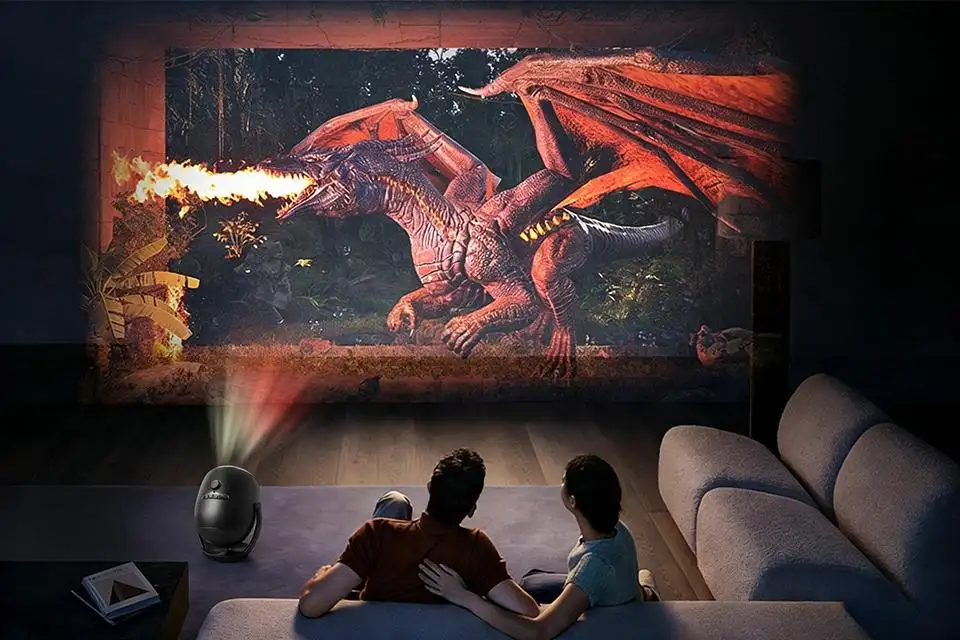
What makes a 3D Star Projector Night Light able to create the illusion of being three-dimensional? How does one product with this technology differentiate itself with true holographic projection from other ordinary star lights? Let’s consider the technology and the trends as well as the skills in the production of this type of product.
How is “Glasses-Free 3D“ Achieved?
Disparity of perspective is depth perception of the brain. Each eye sees a scene from a slightly different perspective and the brain interprets this as a three-dimensional image. The traditional means of 3D cinema has been to use glasses to show different images to the respective eyes. However, projection of 3D stimulation can be delivered without the use of glasses and can be achieved using intelligent design also called projection design.
Light diffraction and interference will be the basis for what will become holographic projection. When lasers illuminate an object they are coherent and a multitude of complex phenomena occur. Light fields become a hologram when both the amplitude and phase are recorded. When properly illuminated, these holograms reproduce the original light fields and allow depth.
For a consumer product such as a 3D Star Projector Night Light, the method used is not the same as laboratory-grade holography. Instead of building a full light field, those products make use of video data of high resolutions which are aimed at walls and ceilings. They also leverage optical systems which deepen perception through motion, shifts in perspective, and layers and superposition of images. Such systems render a 3D effect and an immersive experience, all without 3D glasses.
What You Should Know: Holographic-Style Vs. 3D Appearance
There is a widespread assumption that all products that are marketed and labeled in the 3D category are equivalent. In the star projector category, however, there is a meaningful distinction.
Many products marketed as “3D star projectors” are essentially 2D pattern projectors with a three-dimensional physical shape—the housing might be a globe or a dome, but the projected image remains flat. The user sees stars and nebulae on the ceiling, but the visuals lack depth, motion, or scene variety.
Holographic-style projection is fundamentally different. The combination of motion and carefully arranged scenes gives the viewer the sense of three-dimensional space rather than a flat, two-dimensional pattern. This technique plays right into the evolving technology of displays. Companies such as Samsung are investing massive amounts of resources into display technology that offers wide, immersive, and articulate depths without requiring the use of 3D glasses.
90+ Dynamic Scenes: Content That Adapts to Every Mood
Enhancements and further technology are not the only selling points of the 3D Star Projector Night Light. The 90+ dynamic scenes give this projector a pronounced advantage over traditional single-scene projectors.
Different spaces (and the activities they contain) need different types of lighting.
•Bedrooms: Gentle motion of a galaxy scene encourages relaxation. A scene that slowly rotates stars and nebulae can expedite the process of calming the mind and body to sleep.
•Gaming rooms: Space scenes can help to further immerse the gamer into the game, especially if the scene is colorful and full of dynamic activity.
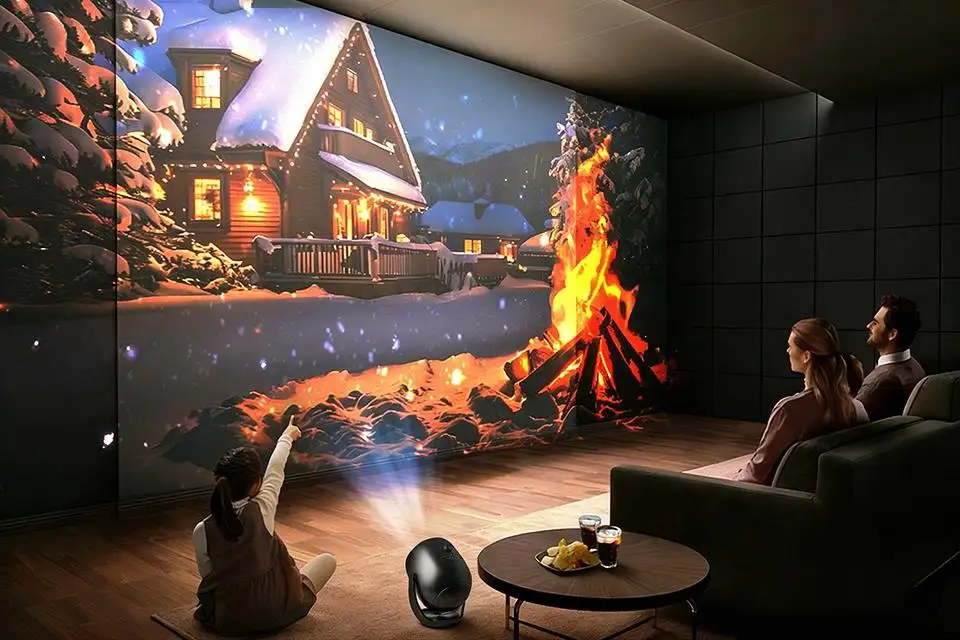
•Home theaters: Different scenes help set the lighting to calm the audience for a documentary or reduce lighting for a movie while setting festive lighting for a comedy.
•Meditation and Relaxation Spaces: Mindfully engaging elements like the calm aurora or a forest invite the viewer’s gaze and imagination.
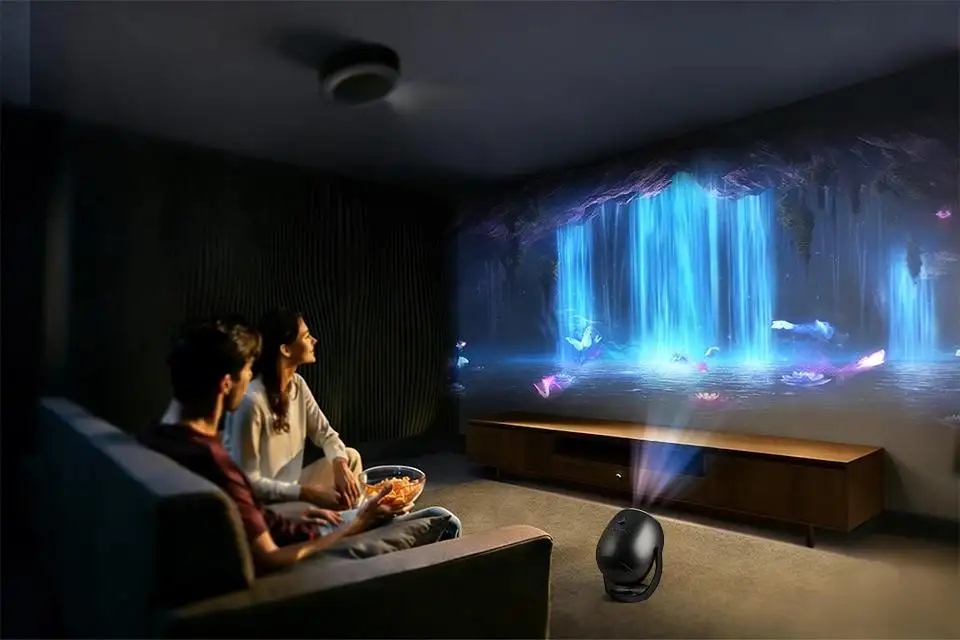
There’s practical value in having one device make the transition from a calm ocean scene to a lively display of a festival. People are not limited to one aesthetic. As the scene can display different things depending on activities, moods, or guests, there’s an explainable popularity for multi-functioning star projectors in both commercial and private spaces.
Engineering the Experience
There are many elements of Engineering that go into Consistent Holographic Projection:
•Optical Projection: A projector that allows users to adjust focus will make sure that the image being projected on a surface, even if the projector is set at a distance of 3 or 5 meters, will be sharp and clear.
•Coverage Area: A projector that can cover 15 to 50 square meters will create a more immersive experience than one that can cover a narrow space. Instead of just decorating the room, the projector will transform the space.
•Color Depth and Range: A more complex color palette will create more appealing effects than just a single color display. Richness may also vary based on a device’s capacity to alter and manipulate hues in a dynamic manner.
•Integrated Audio: Combining various projection systems of both light and sound augments the experience. The patterns and lights will vibrate to the pulsating rhythm of the audio.
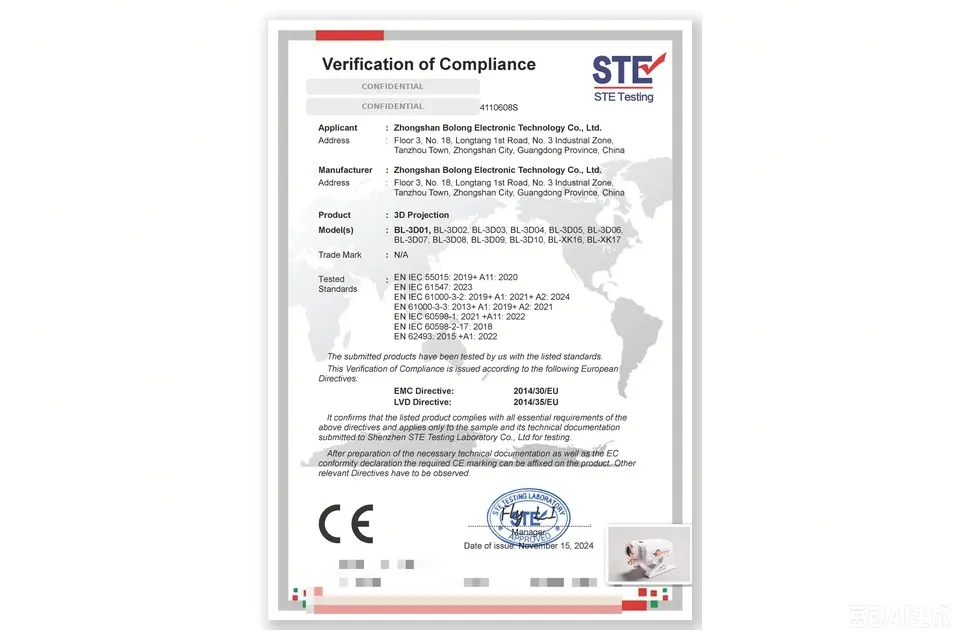
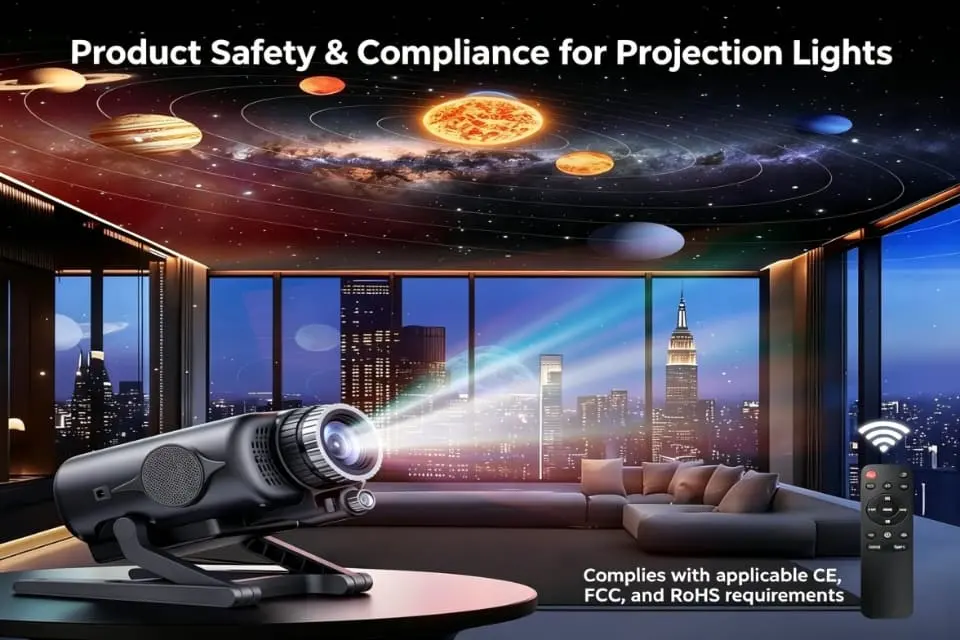
•Safety & Compliance: The design of laser projection tools needs to be observant of the safety measures internationally. Devices categorized as Class 1 lasers by the IEC60825-1 are deemed safe for use. In this regard, the CE, FCC, ROHS and FDA certifications will guarantee safety for the consumer and B2B clients.
Trends that Impact the Market
The star projector market is changing. Trends that will influence consumer behavior include:
•Wellness and Sleep Health: People understand the importance of environment on well-being. Products that make people relaxed and promote sleep are selling. Star projectors that simulate calming visuals are appealing to both kids and adults and are good for use in homes and wellness centers.
•Smart Home Systems: As smart home systems grow, so do consumers’ demands for products that easily fit into their systems. Being voice controlled, app connected, and automation ready are going to be deciding factors.
•Educational Use: Star projectors are starting to be used in schools and other educational institutions to teach Astronomy and other sciences. This is a developing B2B market besides the B2C market.
•Personalization and Customization: For B2B Buyers who are brands, importers, and exporters, and distributors, having the ability to personalize products, packaging and product features is becoming more and more important. Companies that have OEM and ODM capabilities are able to have products that enter the market fast and help to build a strong brand.
•Market Drivers in the Asia-Pacific Region: the Asia-Pacific market is going to be the market that is grow the most with a predicted CAGR of over 12.5%. 3D Star Projectors and the Market
Wellness and home products will flourish as the middle class grows, cities expand, and ecommerce booms.
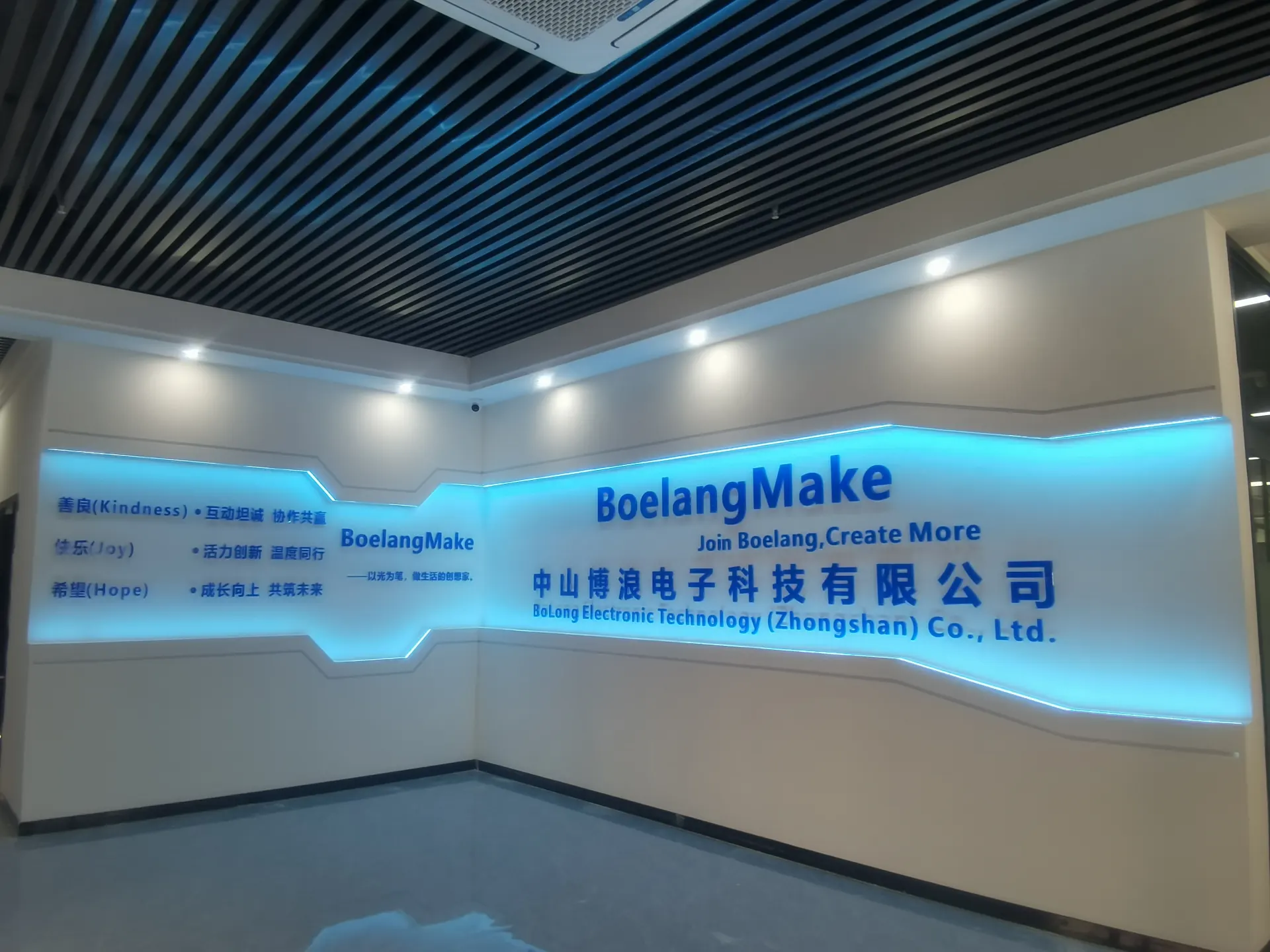
3D Star Projectors require a fine knowledge of laser applications. A company like Zhongshan Bolang Electronic Technology Co., Ltd. shows us that a company can undertake and integrate R&D initiatives right on their factory floor.
Bolang has 10 years of experience focusing on the application of lasers and has established a complete system of manufacturing. Bolang is certified as a factory for BSCI and WCA. Its products obtain factory certifications of CE and testing of TÜV and have the FDA and PSE markings of compliance. This displays dedication and hard work paying off in a product that is of the highest quality in the world.
B2B Buyers Look for More than Just the Product
✅ OEM and ODM services: Companies that wish to differentiate themselves from their competitors can choose what features and functionality will be present in their products, as well as decide what projection theme they want and what lighting effects they want. Companies can also decide the color and design of the packaging and the product.
✅ Flexible MOQ: We are willing to negotiate bulk orders of the product for both retail and wholesale.
✅ Fast Turnaround: Should buyers choose the standard model offered, Bolang is happy to create a model with quick turnaround time. With a clear understanding of the timelines for sample and bulk production, we accept customized orders.
✅ Global Availability: Supported by a strong supply chain and quality inspections, our products have made it into the European, North American, and Middle Eastern and Southeast Asian markets, among others.
✅ Intellectual Property: With 200+ patents, we have made a commitment to investing in innovation and new technologies.
Products Specifications
| Item | Specification |
| Model | BL-3D01 |
| Dimensions | 182 × 193 × 239 mm |
| Adapter Input | 110-240V, 50-60Hz |
| Product Power Supply Input | DC19V / 1.5A |
| 3D Projection Distance | 3-5 meters |
| Projection Area | 15-50m² (161-538 sq.ft) |
| Projection Resolution | High-definition (HD) projection |
| Control Mode | Remote control |
| Application Scope | Indoor use |
| Installation Method | Tabletop |
Buying Tips: What to Look for in a 3D Star Projector Night Light
When considering 3D Star Projector Night Lights for personal use or for a B2B purchase, here are important factors including advantages/disadvantages that you should consider.
| Aspect | What to Consider |
| Projection Technology | Static pattern projection vs. Holographic video projection |
| Scene Variety | The number of scenes and their themes (e.g., galaxy, ocean, forest, festival, etc.) |
| Quality of Images | The ability to focus, adjust the distance, and the coverage the projector can provide |
| Light Source | LED or Laser, color (RGBW) and brightness adjustability |
| Audio Features | Integrated speaker, Bluetooth, and audio-visual synchronization |
| Safety Certifications | CE, FCC, ROHS, FDA, Class 1 laser |
| Control Options | Remote, onboard buttons, ease of use |
| Customization Support | OEM and ODM services for branding, packaging, and other functionalities |
| Lead Times and MOQ | Industry standards for samples, and order quantity |
What to Expect
The combination of display technology, wellness, and personalization incorporates the 3D Star Projector Night Light. The development of technology continues to offer devices with varied functionality. While manufacturers focus on aspects of their offering, buyers are encouraged to look for manufacturers with an emphasis on research development, technology, safety, and customs. The technology shift for projection systems that are holographic and glasses-free meets the current demand for immersive and simplistic experiences. A projector that is thoughtfully designed can instantly alter a space, and is only a button press away.
FAQs
Q: What are the different scenes the projector has?
A: The projector has more than 90 dynamic scenes. For example, it includes galaxies, oceans, forests, and festival themed scenes.
Q: Is it possible to change the brightness and color?
A: Yes, the projector comes equipped with adjustability in brightness and color. You can choose the color and brightness level.
Q: Is there sound?
A: The projector has built in Bluetooth and lets you play music to go along with the projected scenes.
Q: Is the laser safe?
A: Yes, this projector has a Class 1 laser safety certification (IEC60825-1) which makes it very safe.
Q: Is it safe to use in kids rooms?
A: Yes, the light is soft and projection is glare free which will be safe for kids eyes and also creates a serene environment.