3D Space Projector Light with Ultra-Wide-Angle Starry Sky Projection
 FACEBOOK
 TWITTER
 LINKEDIN
Many basic star projectors concentrate light near the center of a ceiling, leaving walls and surrounding areas visually empty. This is particularly true for larger bedrooms and for themed interiors, event spaces, and retail displays.
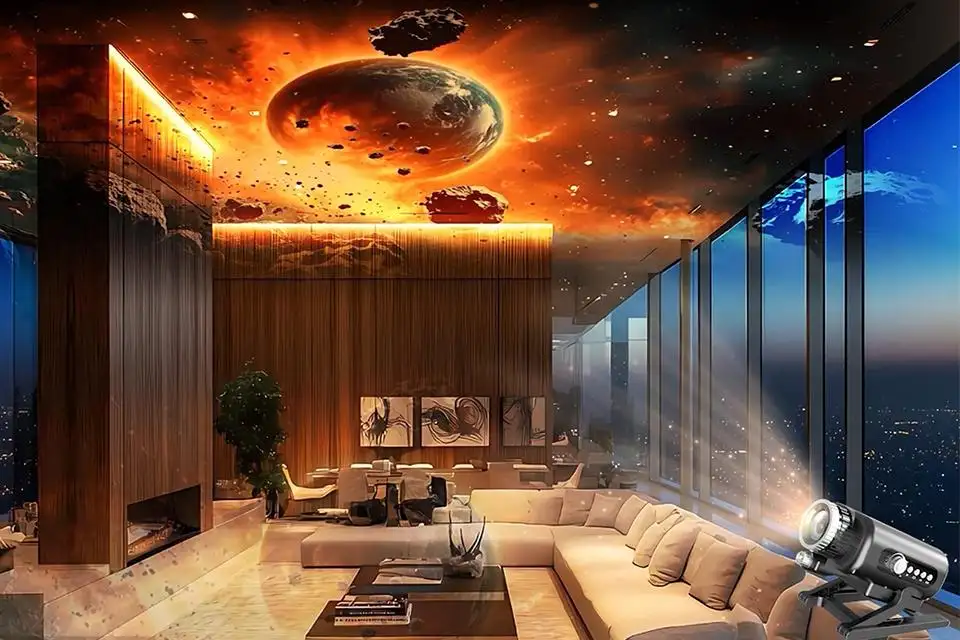
A 3D Space Projector Light uses ultra-wide-angle projection and digital 3D imagery to create the effect of stars and other cosmic elements floating and moving in space. Instead of using flat layers of colored clouds or pinholes of light, it uses projection of nebulae, galaxies, and planets to create an incredible visual depth.
Projection size is just one aspect of performance. Buyers should also analyze the focus and brightness, quality of scene, depth perception, control, noise, and the ability to expand the content of the projector.
What is a 3D Space Projector Light?
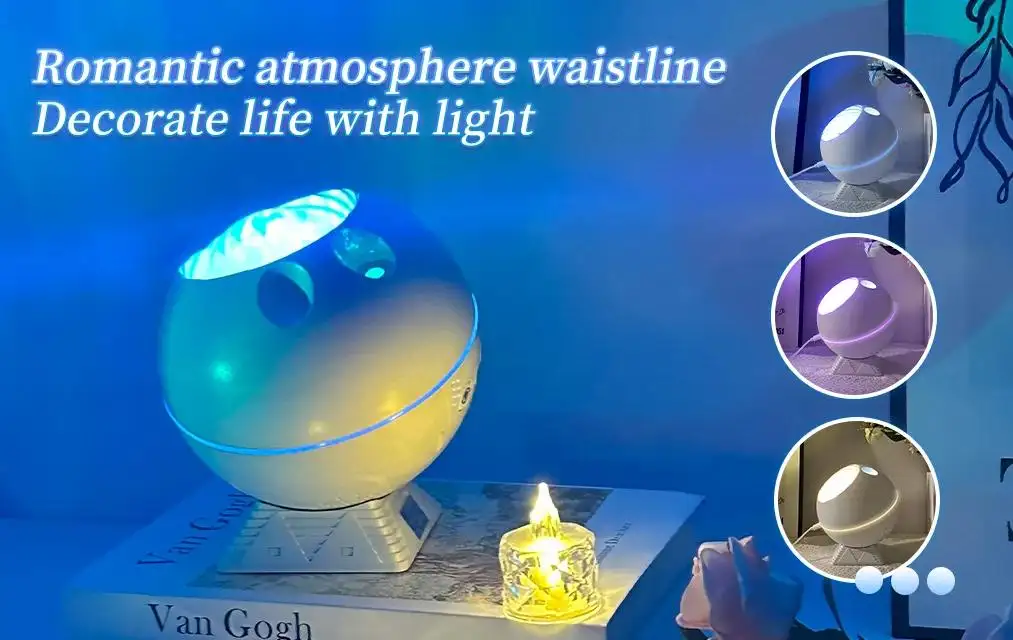
A 3D Space Projector Light is a digital ambient projector designed to display galaxies, planets, nebulae, stars, and deep-space animations across ceilings and walls.
Its naked-eye 3D effect is created through coordinated visual elements such as:
• Layered foreground and background imagery
• Motion and perspective changes
• Light-and-shadow transitions
• Overlapping stars, planets, and nebulae
• Simulated depth and floating visual effects
Users can experience this visual depth without wearing 3D glasses. The result is more immersive than a conventional rotating galaxy projector, although it should not be confused with holographic projection or stereoscopic cinema technology.
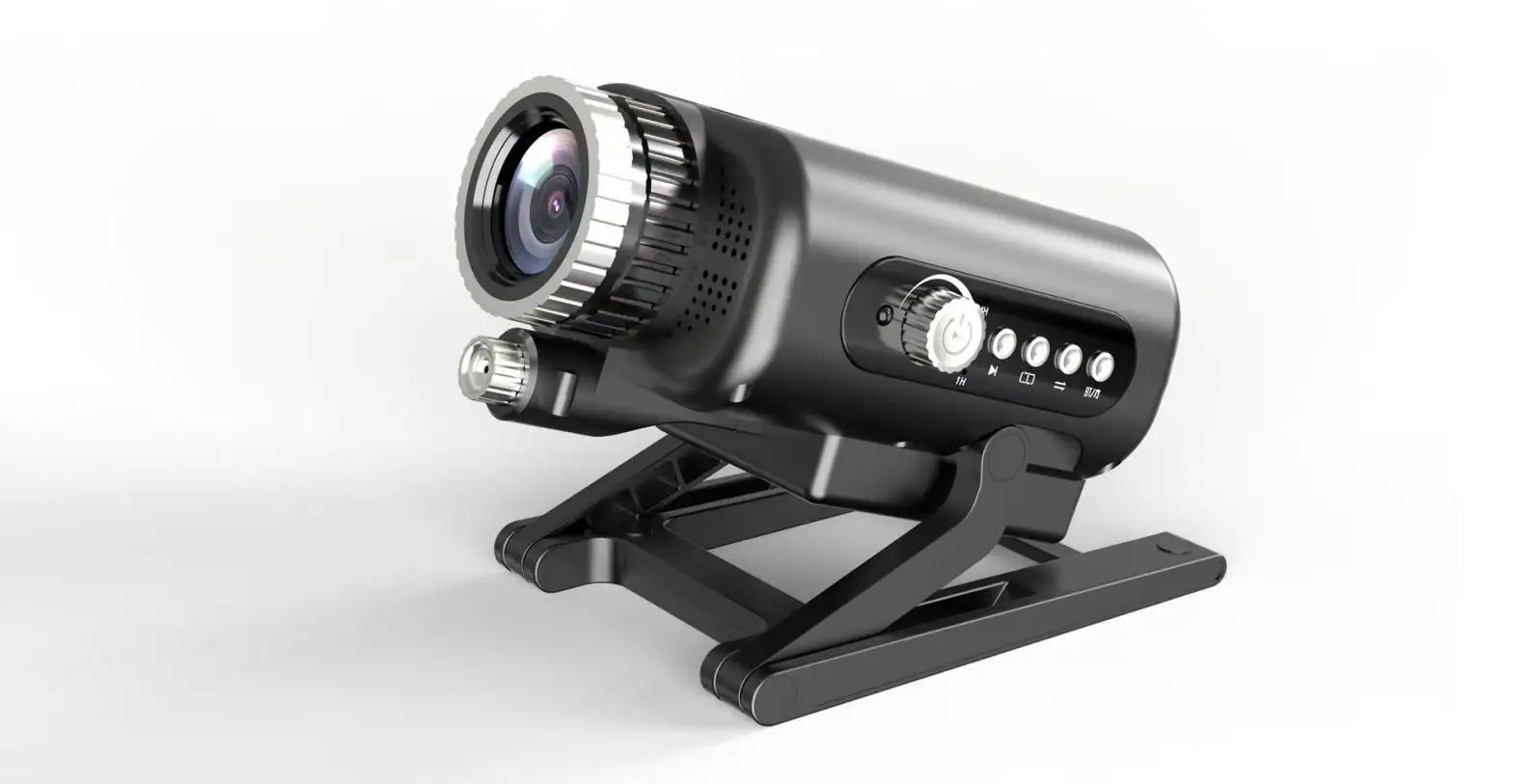
Depending on the configuration, a digital space projector may also include adjustable focus, stored digital scenes, Bluetooth audio, remote control, brightness adjustment, and automatic timers.
How Ultra-Wide-Angle Projection Improves Immersion
Wider Projection Coverage
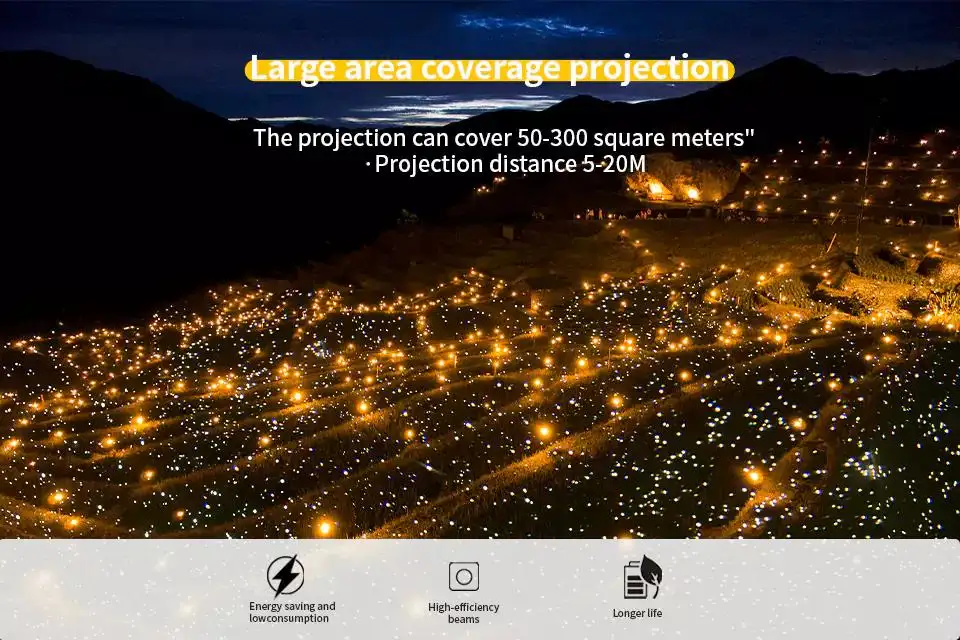
Ultra-wide-angle starry sky projection distributes images across a larger section of the ceiling and surrounding walls. This reduces the common problem of an overly bright center with empty edges.
A projector designed for approximately 15–50㎡ can suit bedrooms, meditation rooms, themed venues, and commercial displays. Actual coverage depends on:
• Projection distance and angle
• Room dimensions
• Wall and ceiling colors
• Ambient light
• Surface texture
• Image aspect ratio
Wide coverage also supports the naked-eye 3D effect because layered scenes have more space to create perceived distance and motion.
Adjustable Focus and Projection Distance
The distance of projection can alter the perception of depth in the image, as well as its clarity and brightness, and its size. In the usual case, large images require large distances for projection, though it is possible edge brightness and sharpness may be compromised.
With a 3D Space Projector Light with adjustable focus, users can adjust the coverage vs. clarity tradeoff for different room sizes. We advise customers to inspect the product at distances they expect to use it at, rather than only considering how it performs at maximum focus in a dark test demo room.
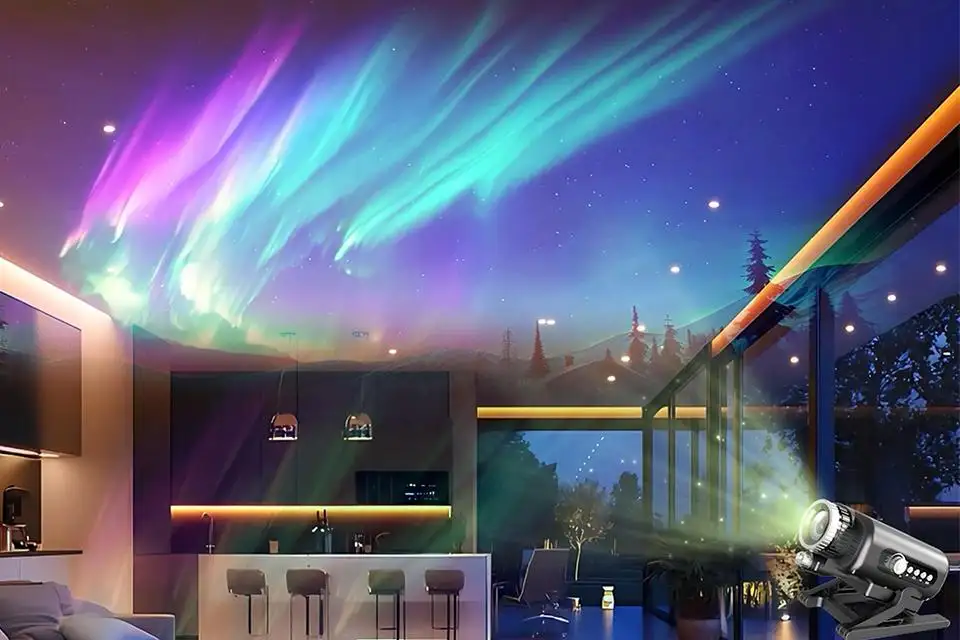
Digital Scene Processing
Unlike slide projectors, a digital HD star projector comes with a built in library of scenes and has the ability to project some animated scenes without the need to change the slide cards.
Some of the benefits include:
• Speed of scene changes
• Animation of the stars and the Cosmos
• Stable images of the placements of stars and themes
• Various star and space themes
• 3D of the Cosmos
• Integrated spaces for your digital content
Features to Consider
| Evaluation Area | What to Confirm | Why It Matters |
| Projection Area | Tested coverage and distance | Determines the room sizes that work |
| Viewing Angle | Standard or ultra-wide viewing angle | Affects coverage of wall and ceiling |
| 3D Effect | Quality of layering, perspective, and motion | Determines depth of the 3D experience |
| Scene Library | Number and type of scenes | Influences variety and options of the content |
| Focus Control | Fixed, manual, or automatic | Determines clarity based on distance |
| Brightness | Range of adjustment | Enables different settings (sleep, events, displays, etc.) |
| Audio | Bluetooth and sync | For added dimension and immersion |
| Controls | Type of controls | Convenience of operation |
| Timer | Auto shutoff functionality | For bedroom use |
| Safety | Laser class and output | For meeting regulatory compliance |
3D Space Projector Light vs. Other Projectors
| Product Type | Main Visual Effect | Naked-Eye Depth | Content Flexibility | Typical Use |
| 3D Space Projector Light | Layered digital cosmic scenes | High | High | Bedrooms, themed spaces, displays |
| Laser star projector | Star points and simple nebulae | Low | Low | Parties and ambient lighting |
| Rotating galaxy projector | Moving stars and colored clouds | Low to medium | Low | Home entertainment |
| Aurora projector | Flowing colored light | Low | Low | Relaxation and meditation |
| Slide star projector | Fixed projected images | Low | Medium | Education and themed images |
| Standard night light | Soft local illumination | None | Very low | Basic nighttime lighting |
A basic laser projector may be more economical for simple ambient lighting. A 3D Space Projector Light is more suitable when buyers require digital scenes, wide coverage, visible depth, animated content, and customization.
From Basic Star Lighting to Naked-Eye 3D Projection
| Product Level | Main Configuration | Key Buying Concern |
| Basic | Single-color stars and simple rotation | Cost, noise and safety |
| Standard | Stars, nebulae, timer and remote | Brightness and coverage |
| Enhanced | Adjustable focus, Bluetooth and digital scenes | Stability and image quality |
| Advanced 3D | Layered scenes, wide-angle optics and naked-eye depth | Optical and scene performance |
| Customized | Exclusive content, housing and packaging | MOQ, lead time and validation |
The upgrade path is not simply about adding more colors. It involves moving from fixed light patterns to digital scenes, from local projection to wide-area coverage, and from flat imagery to layered naked-eye 3D visual experiences.
Where is it Suitable For?
Bedrooms and Relaxation Spaces
Low brightness, slow scene movement, quiet operation, and timers support nighttime routines. Layered galaxies create depth for the naked eye.
Parties and Themed Events
Covers more space, animates more quickly, plays Bluetooth music, and creates more dynamic cosmic scenes in naked-eye 3D.
Retail and Commercial Displays
A custom space projector can be used for gift displays, pop up shops, carpeted theme restaurants, exhibitions, and advertising activities. Custom scenes can be used to project content in line with the campaign or brand.
OEM and ODM Considerations
An OEM 3D Space Projector Light project may include:
• Custom logo and housing color
• Exclusive digital scenes
• Naked-eye 3D content development
• Startup screens and lighting modes
• Remote-control functions
• Packaging and manuals
• Plug and adapter specifications
• Market-specific compliance documents
Buyers should evaluate samples under realistic room conditions and confirm projection coverage, depth effect, focus, firmware, accessories, and scene quality before approving mass production.
Closing Words
Ultra-wide-angle projection is valuable when a space requires broader ceiling and wall coverage. Digital content and naked-eye 3D effects are more relevant when visual depth, scene variety, and immersion are priorities. Economic projectors, with some limitation, will serve users needing projection in brightly lit environments.
BoelangMake supports brands, importers, and distributors creating a 3D Space Projector Light by offering OEM, ODM, and wholesale support from product selection to personalized digital scenes, naked-eye 3D visual development, logo insertion, customized packaging, and flexible functions. Sample review and specification agreement are the starting points; then, ready-to-produce solutions targeted to your market are developed in collaboration with BoelangMake.
FAQs
Q1. What is a 3D Space Projector Light?
A 3D Space Projector Light is a digital ambient projector that layers galaxies, planets, nebulae, stars, and other animated deep-space elements and projects them onto the walls and ceilings of your space.
Q2. Does the projector produce naked-eye 3D?
Absolutely. The projector uses layered images, changes in perspective, movement, and light-and-shadow interplay to produce a 3D effect that can be viewed with the naked eye.
Q3. What is the projector’s area of coverage?
Depending on the model and installation distance, angle of projection, room layout, and ambient light, a compatible model can cover approximately 15–50㎡.
Q4. How many projection scenes come included?
Depending on the model, up to 60 digital scenes can be included, which cover various cosmic elements including scenes of galaxies, planets, nebulae, stars, and more. Always confirm scene availability for the model you are considering.
Q5. Is the projection focus adjustable?
Definitely. With adjustable-focus configurations, you can set the projector to different image clarity levels and different room sizes.